
by chip wendler • mpa president
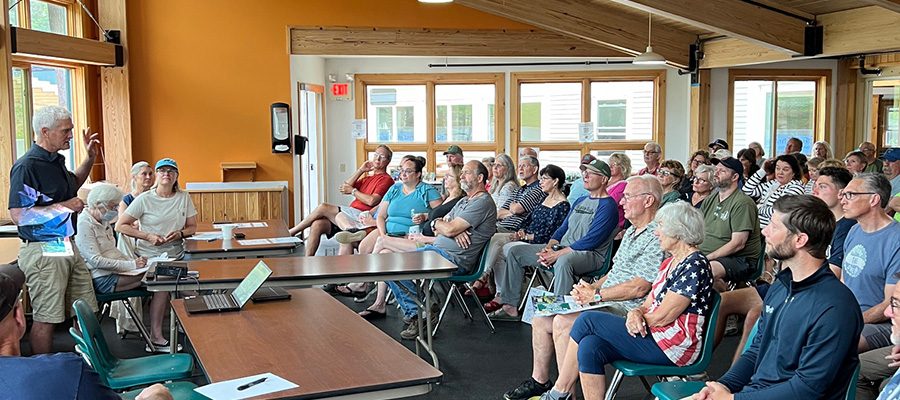
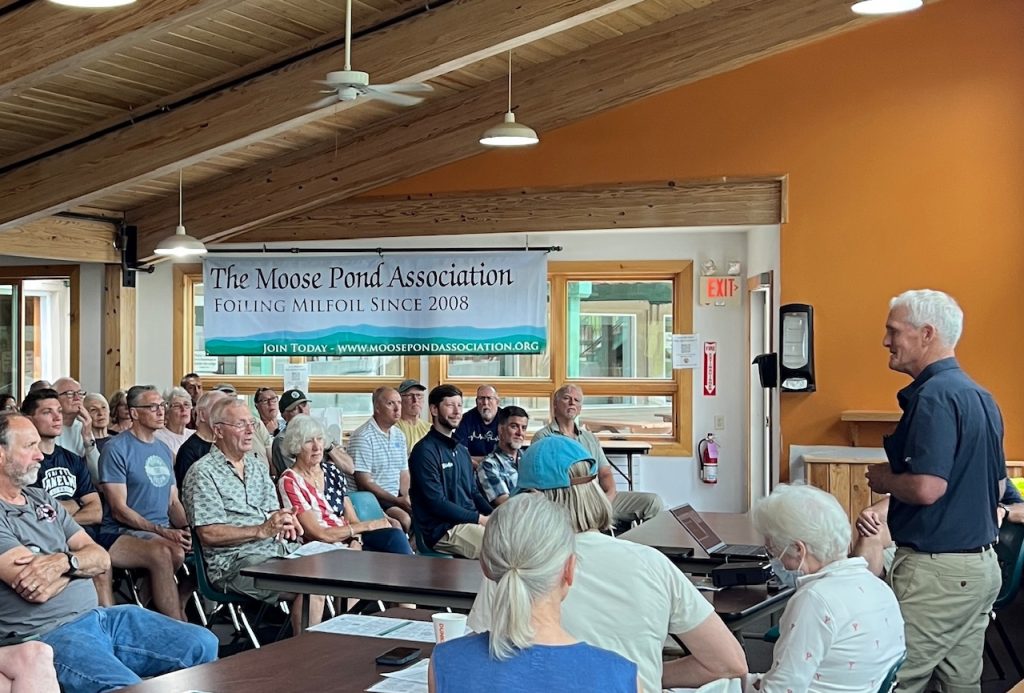
On Saturday, July 12, the Moose Pond Association (MPA) convened its annual meeting at the main lodge of Pleasant Mountain. This year’s event drew a record crowd, with over 100 participants in attendance. After a warm welcome, attendees received updates from several MPA board members and notable guests including Ralph Lewis (General Manager of Pleasant Mountain), Mary Jewett (LEA’s Director of Education and Invasives Prevention), and Matt Markott (Executive Director of the Loon Echo Land Trust)
The annual meeting’s agenda was structured to highlight the virtuous cycle of activities necessary to safeguard Moose Pond for future generations. Key points included:
- Working with LEA to monitor and test water quality
- Supporting initiatives like the Courtesy Boat Inspector (CBI) and Lake Section Captain programs to try to prevent invasive infestations
- Sharing positive findings with members when the lake is healthy
- Alerting members and seeking assistance if concerns are detected
- Taking swift action to address and resolve any problems identified
- Encouraging annual member donations, which fuel these ongoing efforts
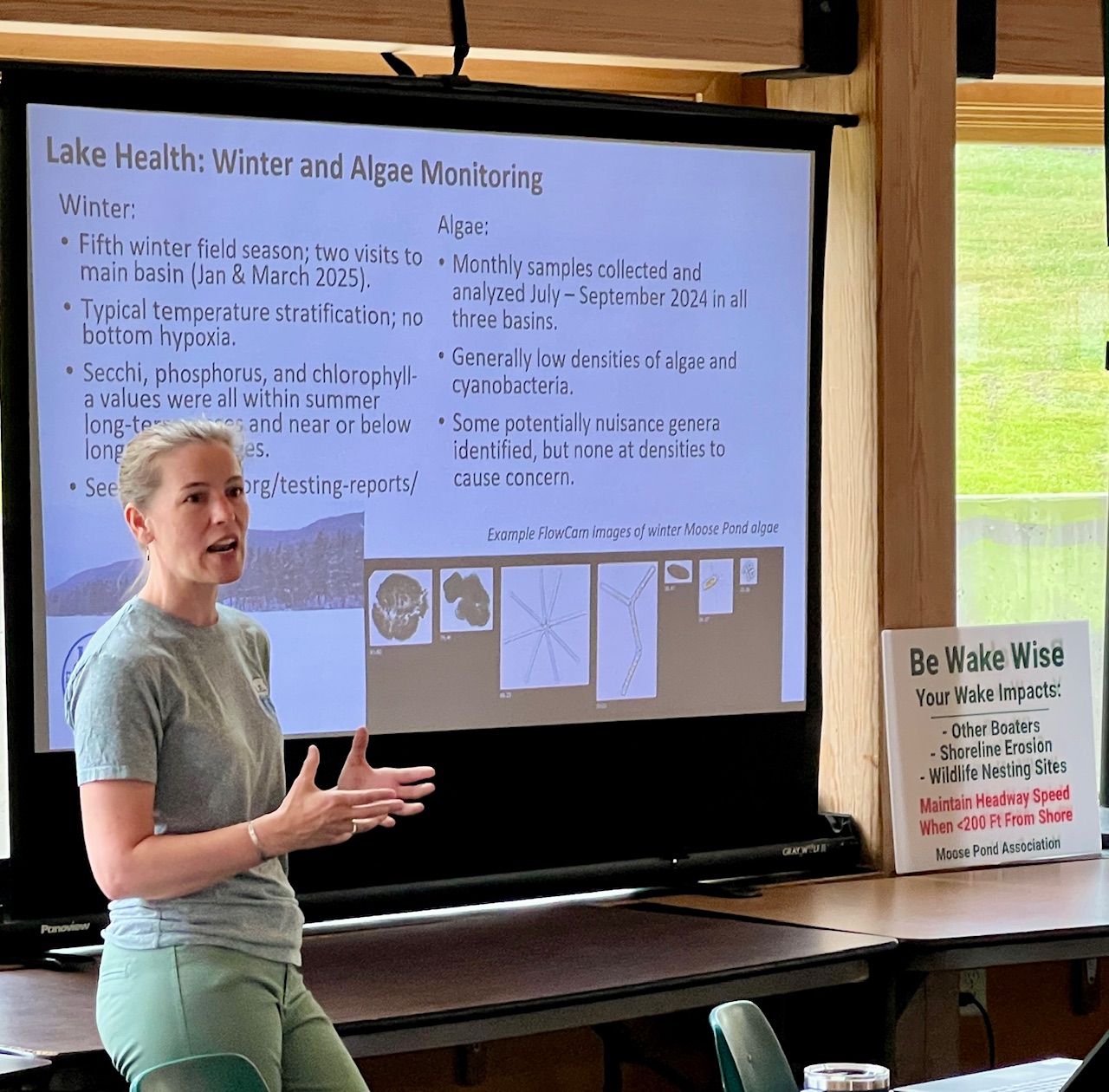
Mary Jewett delivered a comprehensive presentation on Moose Pond’s health, detailing annual summer and winter testing. She emphasized that, in addition to Variable Leaf Milfoil, other invasive plant species – such as the particularly tenacious Hydrilla – pose threats to Maine lakes. Hydrilla is especially resilient because it can regrow from underground tubers even after the visible plant is removed.
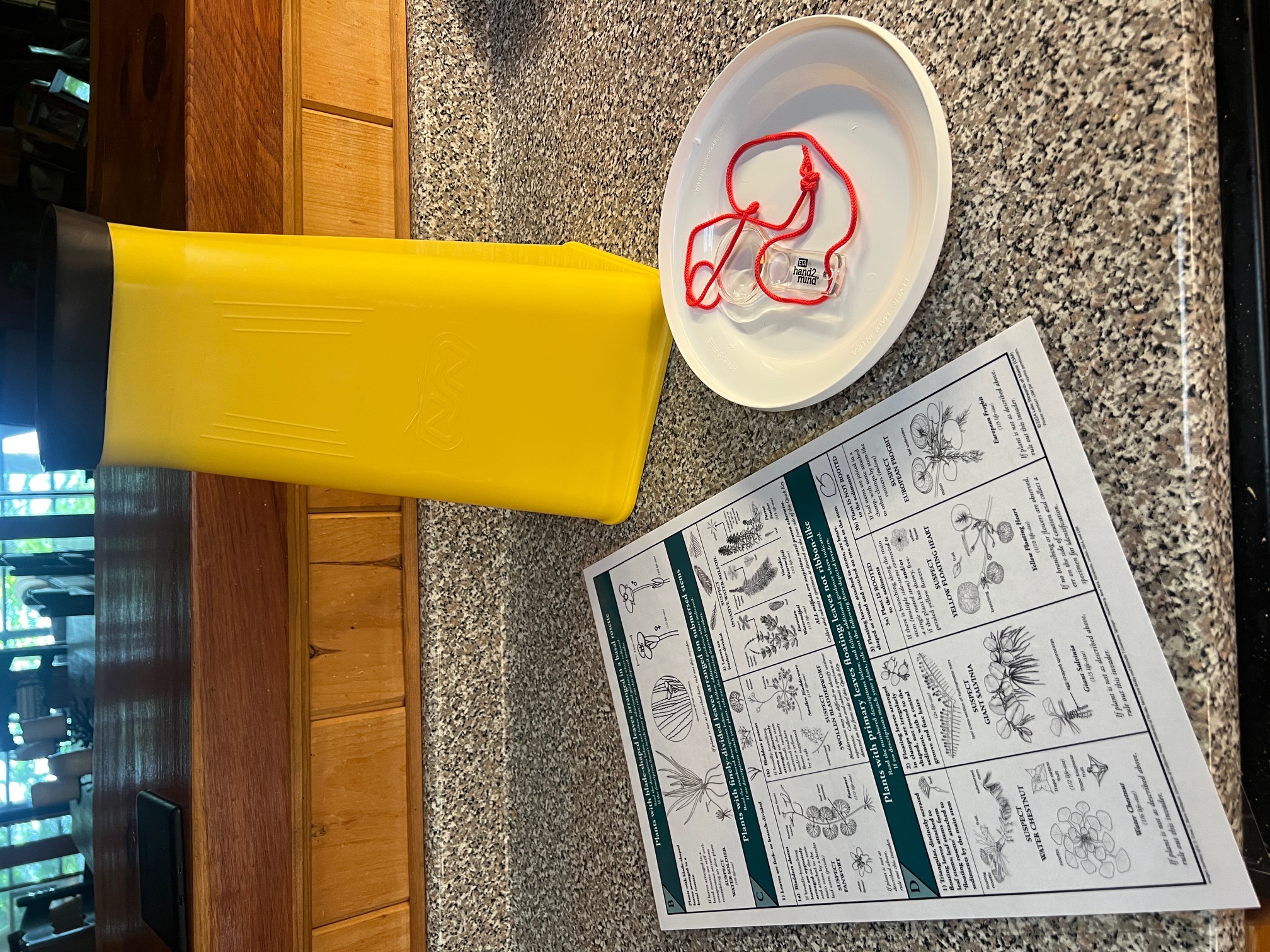
Fortunately, last year’s inspections by LEA divers of key areas, including boat launches, private marinas and the two narrows, found no evidence of invasive plants or animals in Moose Pond. Mary encouraged anyone who discovers suspicious plants to photograph them against a white background in pond water and submit the images to mary@mainelakes.org or bring specimens to the LEA office, noting the harvest time, date, and location. Specimens should be refrigerated in pond water and sealed in a plastic bag.
Mary also reviewed LEA’s “violin charts” that track phosphorus, water clarity, and chlorophyll levels in the pond’s North, Main, and South basins. These trends suggest the lake’s long-term health remains strong. Further details can be found in a subsequent article in this newsletter.
Board member Anne Munstedt provided an update on the loon population, reporting an increase in nesting pairs compared to 2024. During the annual loon count that took place a week after the annual meeting, observers recorded 12 adult loons and five chicks.
Following this, an update was given on the Lake Section Captain Program. While the MPA has historically funded an annual inspection by LEA divers for a small portion of the lake, the majority – about 95% of the lake – had remained unchecked. That is why the MPA started its Lake Section Captain Program in 2022 – to provide more complete coverage. The program is comprised of 17 dedicated volunteers who survey their designated sections of the Moose Pond shoreline twice yearly, in late July and late September. The goal is to detect potential infestations early, so that the MPA with help from others can minimize both the cost of remediation and ecological impact.
The meeting also included a report on the CBI program, noting 1,935 inspections at the two boat launches in 2024 – a notable increase from 1,571 in 2023. Over 40 plant fragments were found in 2024 (up from 10 in 2023), but none were identified as invasive species. However, there was a significant interception of an invasive plant that was about to enter the water at a nearby lake.
Executive Director Matt Markott provided an update on Loon Echo Land Trust’s (LELT’s) work. As one of the largest landowners in the Moose Pond watershed, LELT’s properties are a vital and valuable source of water filtration before stormwater reaches our lake. To date, LELT has protected nearly 2,000 acres on Pleasant Mountain and continues to maintain a robust trail system enjoyed by many of us year-round.
A full copy of the annual meeting presentation and meeting minutes are available on the MPA website. I encourage everyone to review these documents and support our ongoing conservation efforts by making an annual membership donation to the MPA.